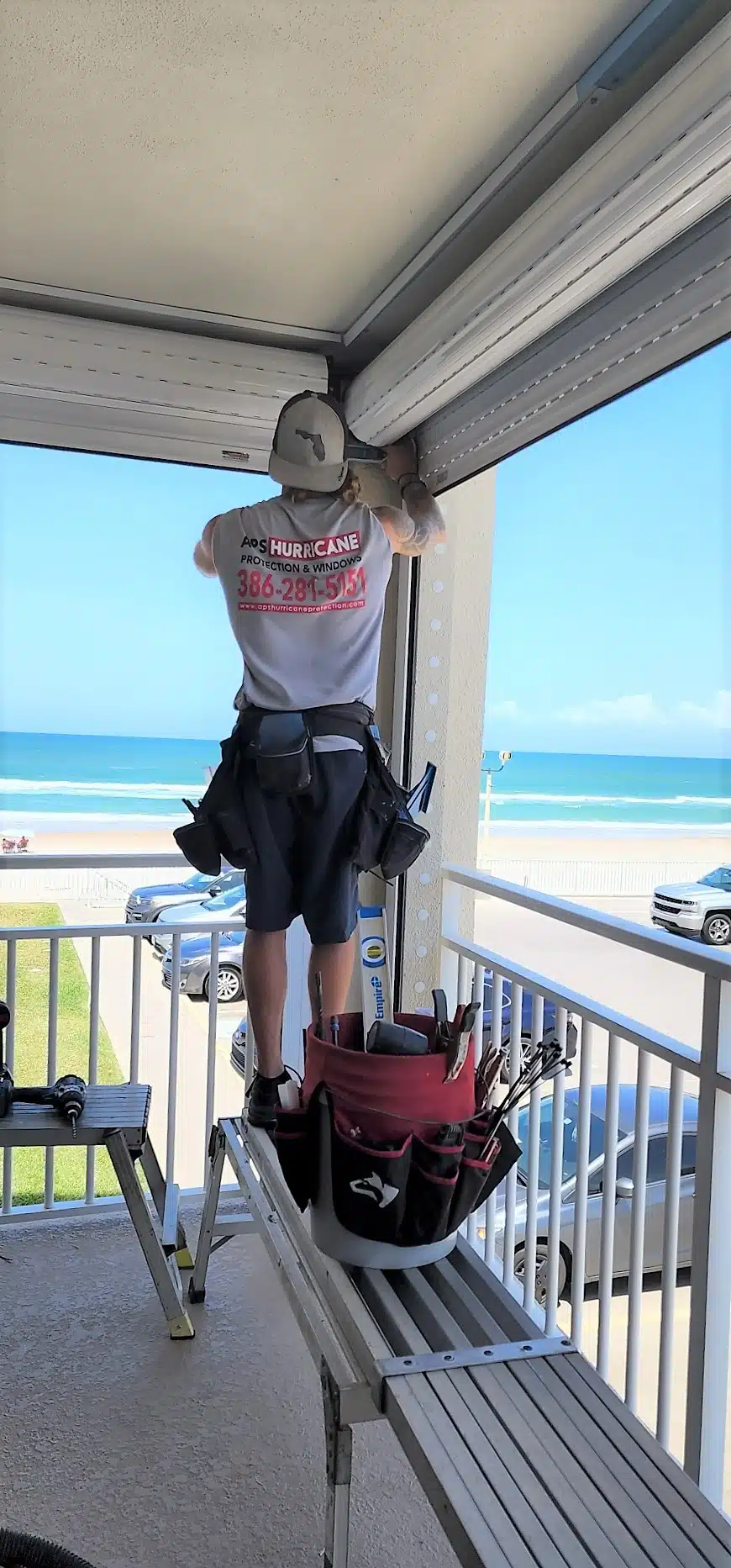

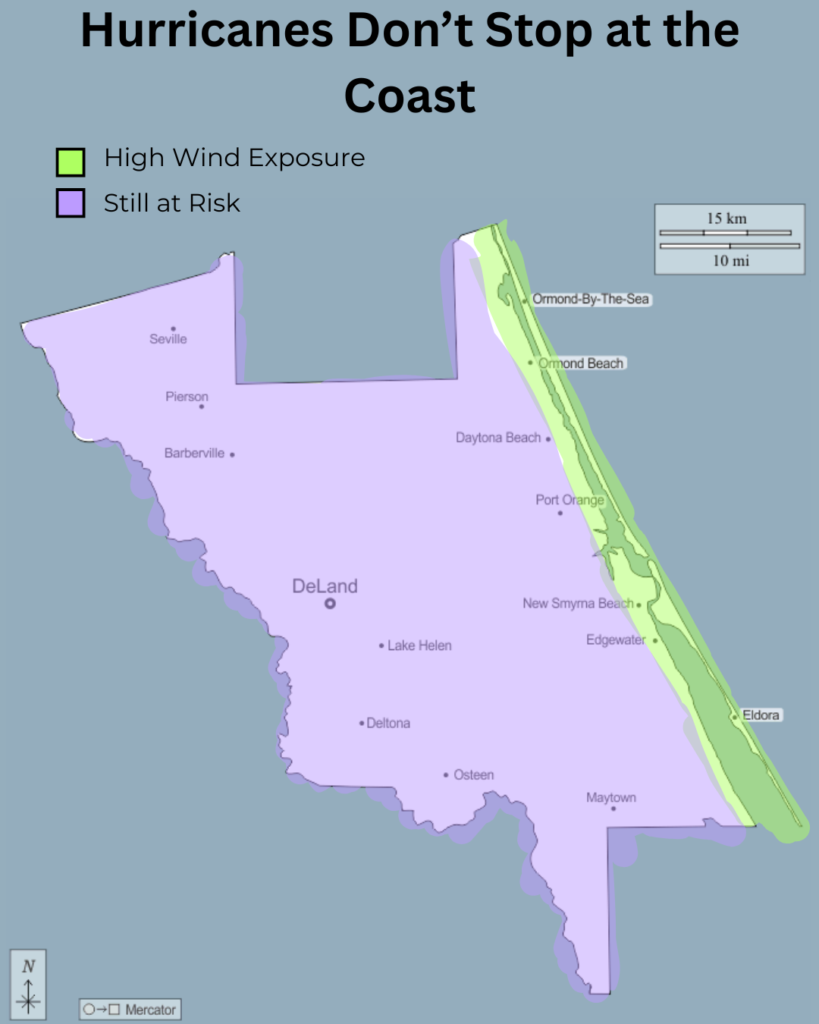
Many homeowners assume hurricane protection is only necessary for beachfront or coastal properties. If you live inland, it’s easy to think you’re safe from the worst impacts of a hurricane. But the reality is that hurricanes don’t stop at the coast — and inland homes can still face serious risks.
So, do you really need hurricane protection if you’re not on the coast?
For most Florida homeowners, the answer is yes.
Hurricanes Affect Inland Areas More Than You Think
While storm surge is primarily a coastal concern, wind, rain, and flying debris travel far inland — sometimes hundreds of miles.
Inland areas often experience:
Strong, sustained winds
Powerful gusts capable of breaking windows
Wind-driven rain entering through doors and windows
Falling trees and airborne debris
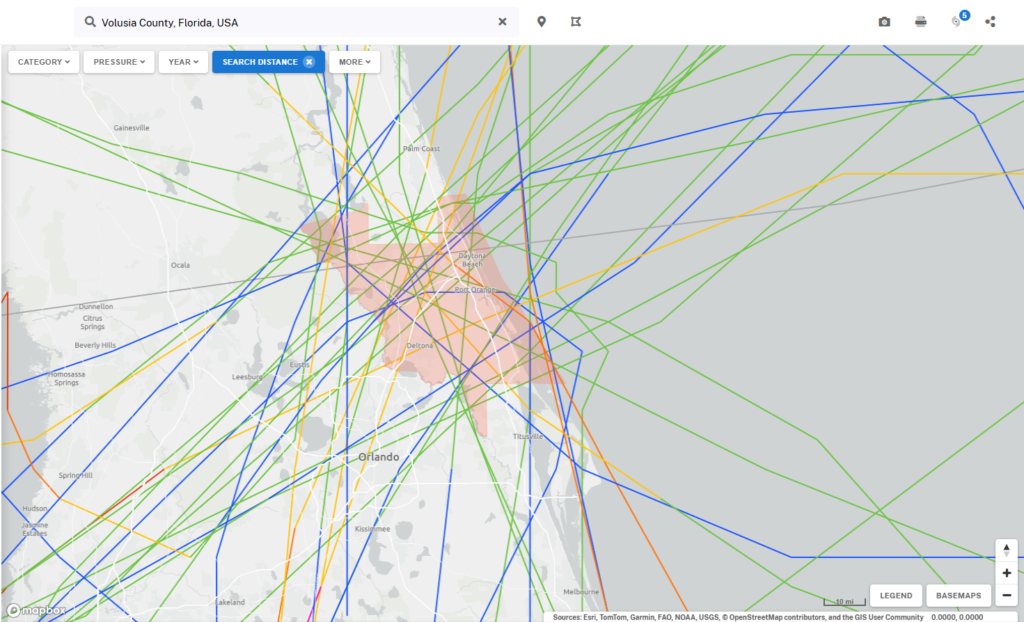
In fact, many hurricanes cause significant damage well away from the shoreline, especially as they move slowly or stall over land. Historical hurricane data shows repeated storm paths impacting Volusia County — including inland areas. See image below for the 41 storms that have hit Volusia County.
Wind Damage Doesn’t Require Coastal Proximity
Hurricane-force winds can:
Shatter unprotected windows
Create pressure changes that damage roofs
Allow rain to enter the home once a window fails
When a single window breaks, internal pressure can build rapidly, increasing the risk of roof uplift and structural damage — regardless of how far you live from the ocean.
Inland Homes Often Have a False Sense of Security
Homeowners away from the coast are more likely to:
Skip installing hurricane shutters
Rely on temporary solutions like plywood
Delay preparation until a storm is close
Unfortunately, this can leave homes vulnerable when:
Installation schedules are full
Supplies are limited
Storm paths shift unexpectedly
Preparedness shouldn’t depend on distance from the shoreline.
Building Codes Don’t Always Mean Full Protection
While Florida building codes have improved, code compliance does not always equal hurricane protection.
Many inland homes:
Have standard windows not rated for impact
Lack protection for large openings like sliding doors
Were built before updated wind-load requirements
Hurricane shutters or impact-rated protection adds an extra layer of security that building codes alone may not provide.
Hurricane Protection Is About More Than Wind
Even inland, hurricanes bring:
Prolonged heavy rainfall
Power outages
Debris from nearby properties
Increased risk of water intrusion
Protecting windows and doors helps:
Prevent interior water damage
Reduce cleanup and repair costs
Maintain safety during extended storms
Who Should Consider Hurricane Protection Inland?
You should strongly consider hurricane protection if:
You live anywhere in Florida or a hurricane-prone region
Your home has large windows or sliding glass doors
You rely on plywood during storms
You want peace of mind during hurricane season
You prefer to prepare early rather than react last minute
Hurricane protection isn’t just for coastal homes — it’s for prepared homeowners.
Final Thoughts: Distance From the Coast Isn’t a Guarantee
Living inland does not eliminate hurricane risk. Wind, rain, and debris can cause serious damage well beyond coastal areas, and storms don’t always follow predicted paths.
Hurricane protection is about reducing risk, protecting your investment, and feeling confident when storms approach — no matter where your home is located.
If you’re unsure what level of protection your home needs, learning your options early can make all the difference.
Ready to Learn More?
Understanding your home’s vulnerability is the first step toward better protection. Exploring hurricane protection options early helps ensure you’re prepared long before a storm is in the forecast.